
Osteochondritis Dissecans (OCD)
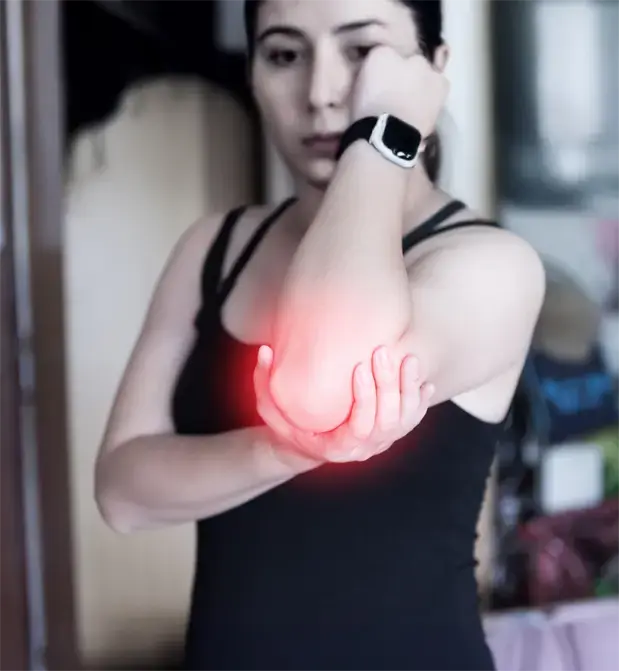
Osteochondritis dissecans (OCD) lesions of the elbow are an uncommon disease that primarily affects adolescents. The incidence may be higher in certain subpopulations of sports with an upper extremity component. OCD lesions are defined as ‘‘a focal idiopathic alteration of subchondral bone and/or its precursor with risk for instability and disruption of adjacent articular cartilage that may result in premature osteoarthritis”. Although various theories have been proposed, the etiology of most OCD lesions remains contested within the orthopedic and basic science communities. OCD lesions occur in many joints of the body, with the elbow representing the second most common location. When OCD occurs within the capitellum of the elbow, the symptoms may be insidious, and the diagnosis is often delayed. Due to the heterogeneous clinical presentations, initial management strategies can vary widely.
Early identification of elbow OCD lesions is sometimes possible through screening efforts that work to educate at-risk young active individuals about the problem and its early signs and symptoms. Some of these screening efforts have also attempted to use ultrasound to identify minimally or silent OCDs. Unfortunately, the diagnosis is often delayed and recognized at a later point along the continuum of the disease. As the lesion progresses, the cartilage may crack or fissure. Similarly, the bone may separate from the underlying normal bone and, in its worst cases, become a free fragment within the elbow joint.

While the exact cause isn’t fully understood, several factors may contribute:
OCD symptoms can vary, but common signs include:
Doctors use a combination of approaches to diagnose OCD:
Treatment depends on the patient’s age, the stability of the lesion, and how advanced the condition is:

Learn about the doctors and centers dedicated to advancing Elbow OCD care worldwide.

Get clear information on what it is, who it affects, and how it’s diagnosed.

Explore physical therapy routines and strategies that support healing and long-term joint health.

Access educational articles, guides, and tools designed to help you and your family navigate care.